

Luteal Phase Foods: Eating for Your Body’s Harvest Season

A close-up of a woman holding a bunch of blueberries for luteal phase foods
After the vibrant radiance of summer, the landscape shifts, giving way to the rich, grounded stillness of autumn. Nature is preparing to draw her energy inward, gathering the fruits of what was cultivated in the seasons before. Within the landscape of a woman’s body, a parallel shift occurs every single month. If the follicular phase is our spring (a time of sprouting, rising estrogen, and vibrant growth) and ovulation is our summer, then the luteal phase is your body’s harvest season — the days right before your period.  In this article, we’ll explore the physiological changes that occur during the luteal phase and share nutrition strategies to support your hormone health during this season of your cycle. With the right tools, you can shift this premenstrual phase from a monthly challenge into a positive, intentional period of recovery and growth.

From Ovulation to the “Yellow Body”: The Alchemy of the Corpus Luteum

The transition from ovulation into the luteal phase relies on an incredible cellular makeover. During the first half of your cycle (the follicular phase), fluid-filled sacs called follicles grow inside the ovary. Each one contains a single egg, and the largest ones produce rising levels of the hormone estradiol.1 When ovulation arrives, the dominant follicle opens and releases the mature egg into the fallopian tube.2 But what happens next is a brilliant transformation act: the empty shell left behind is not discarded. Triggered by a sudden spike of luteinizing hormone (LH), the now empty follicle goes through a total transformation called luteinization.3 Its cells begin storing cholesterol and a rich concentration of a gold-colored nutrient called lutein (the same antioxidant found in leafy greens and egg yolks).4 Out of this empty shell emerges a temporary, highly active gland rich with new blood vessels. Scientists call this the corpus luteum, which is Latin for “yellow body.” The main purpose of the corpus luteum is to create and release large amounts of progesterone.5 Even the name “progesterone” speaks to its special purpose: it comes from the Latin pro (meaning “for”, or “in favor of”) and gestare (meaning “to bear or carry”, as in gestation).6 That’s why progesterone is affectionately known as the “pregnancy hormone.”7
A man and woman sitting on a rock at dusk with luteal phase deficiency
While estrogen brings an open, outward-focused energy, progesterone works quietly on the inside. It calms and restores balance to the uterine lining, preparing this inner landscape to receive a potential pregnancy.8 It nourishes, strengthens, protects, waits, and holds space. Like autumn fruit, the life of the corpus luteum is rich, but fleeting. If fertilization does not occur, the corpus luteum has a lifespan of about 14 to 16 days.9 After that, progesterone levels drop, and the velvet uterine lining is shed in menstruation, marking the start of your body’s biological winter.

Progesterone’s Whole-Body Ripple Effect

When produced by the corpus luteum, progesterone acts as a balancing, protective anchor for your whole body:
    Nervous system: Progesterone crosses the blood-brain barrier and converts into allopregnanolone, a “neurosteroid” that binds to GABA-A receptors.10 GABA-A receptors act as your brain’s braking system, promoting rest, calm, and neurological stillness.11 This means that optimal progesterone production helps create an atmosphere of emotional resilience and deep, peaceful sleep.
  • Metabolic rate: Progesterone is thermogenic, meaning it boosts your metabolism to help you burn more fat. It acts on the hypothalamus to raise your resting body temperature by 0.5 to 1.0 degree Fahrenheit, increasing baseline energy expenditure by about 3% up to 10%.12,13,14 During the mid-to-late luteal phase, your body may burn an extra 100 to 300 calories per day simply to maintain its inner fire.15
  • Thyroid: Progesterone helps the thyroid work and grow by directly controlling its genes.16 It calms systemic inflammation and promotes the conversion of inactive thyroxine (T4) into active triiodothyronine (T3).17 In turn, adequate thyroid hormone is required by the ovaries to produce progesterone.
  • Cardiovascular system: Progesterone maintains blood vessel elasticity, reduces inflammatory responses, lowers blood pressure, and modulates lipid profiles. All of these actions contribute to a lower cardiovascular disease risk.18
  • Bone matrix: Progesterone acts alongside estrogen to stimulate osteoblasts, the cells that build and protect your bone matrix.19

When the Golden Body Stumbles

When there is insufficient progesterone release during the luteal phase, it creates a state known as luteal phase deficiency or luteal phase defect. It indicates a collapse of the delicate symmetry between estrogen and progesterone. Women entering perimenopause may feel this shift acutely, as changes in ovulation may cause the corpus luteum to degrade earlier than normal. Women who have luteal phase deficiency may experience:20,21
  • Premenstrual spotting
  • A slow, rather than sudden, rise in basal body temperature
  • Shorter and more frequent bleeding (every 21 days or less)
  • Sudden, dark periods of anxiety
  • Difficulty getting pregnant
And because progesterone insufficiency lowers thyroid function, it can create subclinical hypothyroidism.22 This means you could experience symptoms like unexpected weight changes, brain fog, fluctuations in energy levels, and mood swings – all signs that a storm could be brewing even though laboratory panels insist the water is calm.
A woman standing in water to support progesterone naturally

Can You "Boost" Progesterone With Luteal Phase Foods?

The answer requires a deeper understanding of seasonal rhythm. Because the corpus luteum is built entirely from the pre-ovulatory follicle, a strong luteal phase is established weeks earlier during the follicular phase, or spring. In other words, you cannot harvest bountiful fruit in October if the field was neglected in April.

Feeding yourself in the luteal phase should be an act of reverence for your body’s internal harvest.

Remember, your table isn’t merely sustenance. The rich, golden hues of autumn mirror the pigments building within your corpus luteum. Eat warm, deeply comforting foods to support your digestion.

Luteal Phase Foods: Nutritional Pillars in Your Body’s Harvest Season

To tend the luteal fire, your nutritional strategy should revolve around caloric safety, metabolic grounding, and deep micronutrient density.

1. Honor Your Body’s Elevated Metabolic Needs

Because basal metabolic rate rises after ovulation, strict caloric restriction in the luteal phase sends stress signals to your hypothalamus. High cortisol and low energy availability directly cause premature regression of the corpus luteum.23,24 Ensure sufficient intake of nutrient-dense, real-food calories each day to honor your body’s rising physical requirements.

2. Rooting Carbohydrates

Many women often crave carbohydrates during this phase. Rather than viewing this as a flaw of willpower, we must recognize it as a physiological demand. Dietary carbohydrates maintain the conversion of T4 to active T3 in the liver and regulate the creation of serotonin.25,26 Carbohydrate restriction in the luteal phase lead to a rise in cortisol levels, which can blunt the calming effects of progesterone on the nervous system.27 Reach for whole-food carbohydrates that carry the colors of autumn:
  • Starchy root vegetables: Sweet potatoes, winter squashes, pumpkins, golden beets, and carrots (embodying the sienna, ochre, and burgundy pigments of the earth).
  • Dark fruits: Blackberries, pomegranates, dark grapes, and crisp apples.
  • Whole, organic grains: Organic oats, quinoa, wild rice, lentils, and chickpeas.

3. Co-Factors: B6, Zinc, and Healthy Fats

  • Vitamin B6 (pyridoxal-5-phosphate): Vitamin B6 supports the health of the corpus luteum. Abundant in pasture-raised poultry, bananas, spinach, and sesame seeds.
  • Zinc and magnesium: Zinc drives cellular division within the developing corpus luteum, while magnesium cools the nervous system and lowers smooth muscle tension. Look to pumpkin seeds, rich dark chocolate, grass-fed beef, and leafy greens.
  • Healthy fats: Progesterone cannot be built from thin air; its core chemical backbone is cholesterol.28 Pure butter, ghee, avocados, extra virgin olive oil, and wild-caught fish supply the building blocks for progesterone synthesis.

4. Resting the Fields

During the luteal phase, your body is operating under higher metabolic demand. High-intensity interval training (HIIT) or exhausting cardiovascular endurance sessions can cause prolonged cortisol elevations, causing progesterone to decline prematurely. Try to shift your movement patterns to match the season, such as heavy, slow lifting; grounding hikes through autumn leaves; Pilates, and slow yoga.

A Time for Inner Reflection

As progesterone peaks and begins its slow downward turn, many women feel more sensitive, raw, or protective of their energy during these days. Rather than asking, “Why am I so reactive? or trying to suppress your feelings, take some time during this phase to perform an audit of your life and energy. Gently ask yourself these autumn reflections:
  • What is happening within me? What is becoming? What is to be?
  • What in my life is asking to be completed and harvested?
  • What is asking to be protected?
  • What seed is asking to be rested now?
  • What is asking to die and become compost?
  • What am I harvesting? What am I hoarding?
  • What heavy burden am I carrying that no longer needs to come with me?
  • What would I like to remember when winter arrives?

The Harvest Bowl

To give your inner life a physical altar during the luteal phase, consider creating a Harvest Bowl. As you navigate your luteal phase, gather small physical symbols that mirror your internal landscape and lay them inside a shallow bowl:
  • A golden leaf found on a quiet trail
  • A seed pod
  • A stone
  • A folded slip of paper with a written truth
  • A gift given to you by a friend
  • An item you made
  • A handwritten recipe card
The simple physical act of bringing these items together in your harvest bowl gives your emotional world a home. It converts invisible internal shifts into a quiet, grounded ritual.
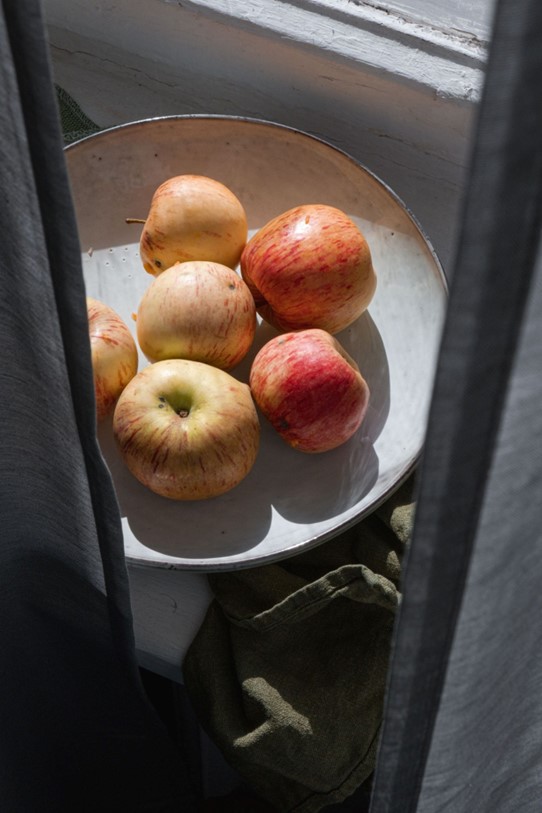
A plate of apples on a table to increase progesterone with food

Learn More About Luteal Phase Foods and Women’s Hormone Health

Your menstrual cycle is a living rhythm that mirrors the seasons of the earth. By connecting the luteal phase as your body’s harvest season, you bring your modern life into harmony with your ancient biological wisdom.

If you’re navigating hormone imbalances, perimenopause, or luteal phase challenges, you don’t have to wander through the wilderness alone.

Book a complimentary 15-minute consultation with me to see if our approach might be a good fit for your needs.

References:
  1. https://www.sciencedirect.com/topics/biochemistry-genetics-and-molecular-biology/follicular-phase
  2. https://www.sciencedirect.com/topics/biochemistry-genetics-and-molecular-biology/follicular-phase
  3. https://www.sciencedirect.com/science/chapter/monograph/pii/B9780123971753000235
  4. https://www.sciencedirect.com/science/chapter/monograph/pii/B9780128118375000198
  5. https://www.sciencedirect.com/science/chapter/edited-volume/pii/B9780125154000500506
  6. https://www.etymonline.com/word/progesterone
  7. https://pmc.ncbi.nlm.nih.gov/articles/PMC8538361/
  8. https://my.clevelandclinic.org/health/body/24562-progesterone
  9. https://www.sciencedirect.com/science/chapter/edited-volume/pii/B9780125154000500506
  10. https://pmc.ncbi.nlm.nih.gov/articles/PMC7432434/
  11. https://pmc.ncbi.nlm.nih.gov/articles/PMC7527439/
  12. https://pmc.ncbi.nlm.nih.gov/articles/PMC7575238/
  13. https://pmc.ncbi.nlm.nih.gov/articles/PMC13066135/
  14. https://pubmed.ncbi.nlm.nih.gov/41971666/
  15. https://pubmed.ncbi.nlm.nih.gov/32658929/
  16. https://pmc.ncbi.nlm.nih.gov/articles/PMC4454767/
  17. https://pmc.ncbi.nlm.nih.gov/articles/PMC4454767/
  18. https://www.sciencedirect.com/science/article/abs/pii/S0039128X26000991
  19. https://pubmed.ncbi.nlm.nih.gov/29962257/
  20. https://www.asrm.org/practice-guidance/practice-committee-documents/diagnosis-and-treatment-of-luteal-phase-deciency-a-committee-opinion/
  21. https://www.sciencedirect.com/science/article/pii/S001502822100128X
  22. https://pmc.ncbi.nlm.nih.gov/articles/PMC9869540/
  23. https://pmc.ncbi.nlm.nih.gov/articles/PMC7280552/
  24. https://pmc.ncbi.nlm.nih.gov/articles/PMC6938264/
  25. https://pmc.ncbi.nlm.nih.gov/articles/PMC12468144/
  26. https://pmc.ncbi.nlm.nih.gov/articles/PMC12209867/
  27. https://pubmed.ncbi.nlm.nih.gov/8616715/
  28. https://www.sciencedirect.com/topics/immunology-and-microbiology/progesterone-synthesis
Leave a Comment

Your email address will not be published. Required fields are marked *

Scroll to Top
Free Cycle Guide Magazine

Know Your Cycle

This guide will take you on a journey to understand your menstrual cycle and hormones, giving you the tips you need to connect with your monthly rhythms.

Download Cycle Guide Magazine