Have you ever wondered why some women breeze through their cycles while others struggle with PMS, mood swings, and painful periods?
The answer often lies in the follicular phase—the first half of your cycle (days 1-14). This is when your body is busy building estrogen, preparing for ovulation, and setting the stage for the entire month ahead. Think of your menstrual cycle like a garden—and the follicular phase as planting season, or “spring.”
What you eat during this first half of your cycle determines how you’ll feel in the second half. In this guide, we’ll explore the essential follicular phase foods that support balanced hormones, better ovulation, and improved metabolic health, so you can experience easier cycles and fewer PMS symptoms. Let’s dive in.
The Hormonal Landscape During “Spring”
The follicular phase marks the first stage of your menstrual cycle. It begins on the first day of your period (menstruation) and ends at ovulation, or roughly days 1 through 14 of a 28-day cycle, and through day 16 of a 30-day cycle. Remember that variations in cycle lengths are normal and may change as you age.1
The follicular phase is when your ovaries choose one egg to mature and prepare for ovulation. This egg grows inside a follicle—a small fluid-filled sac that nourishes and protects it. The process is controlled by follicle-stimulating hormone (FSH).
As the follicle grows, it releases a type of estrogen called estradiol, which triggers your uterine lining to begin thickening. Blood vessels multiply and the lining becomes rich with nutrients, preparing for a potential pregnancy. This is why the follicular phase is also called the “proliferative phase” —your body is building and preparing. If pregnancy doesn’t occur, the uterine lining is eventually shed during your period.
You may also feel lighter, more energetic, and more focused as your estrogen levels climb. This is thanks to estrogen’s boosting effect on various neurotransmitter systems, such as serotonin, dopamine, and norepinephrine.2
Levels of estradiol continue to rise throughout most of the follicular phase and reach their peak around day 12 or 13. About 24 to 48 hours after your body reaches peak estradiol levels, there is a rapid surge of luteinizing hormone (LH). This LH surge lasts about 36 hours and triggers the release of an egg from the dominant follicle, signaling the start of ovulation.3
Why the Follicular Phase is Critical for Progesterone Production
A common concern among women is low progesterone in the luteal phase, also known as luteal phase defect or deficiency. Many women become aware of this problem when they start experiencing spotting, more frequent periods, or difficulty getting pregnant.4 Some may try to “fix” their progesterone during the second half of their cycle, but the reality is that the second half of the cycle simply reveals what already happened in the first half.
Progesterone is produced by the corpus luteum, a group of cells that forms after an egg is released during ovulation. The progesterone produced by the corpus luteum is absolutely essential to prepare the uterine lining for implantation.5 If the follicle wasn’t properly nourished or if estrogen didn’t reach a robust peak during the follicular phase, the corpus luteum will be weak, leading to subpar progesterone production.6
Therefore, eating the right follicular phase foods isn’t just about estrogen; it’s the most effective way to boost progesterone naturally later in the month.
The Insulin Obstacle
There’s one major obstacle to follicular health that doesn’t get talked about enough—chronic hyperinsulinemia (high insulin), a hallmark of insulin resistance.
Insulin is primarily responsible for regulating glucose levels by inducing its uptake in tissues throughout your body. But insulin plays another important role as a co-gonadotropin. The term “co-gonadotropin” refers to a hormone that works with other gonadotropins (such as FSH and LH) to support the functions of the gonads (testes and ovaries). In our case, insulin amplifies the action of LH on cells that are responsible for producing androgens (theca cells).7 This means that insulin works together with LH to boost androgen production.
Insulin also has an inverse relationship with dehydroepiandrosterone (DHEA) and sex hormone binding globulin (SHBG), both of which are needed for healthy estrogen and androgen levels.8 High insulin levels can suppress DHEA and SHBG levels. When SHBG production is inhibited, levels of circulating free androgens increase, leading to the key features of polycystic ovarian syndrome (PCOS), such as acne and ovulatory dysfunction.9 DHEA is also known to have a protective effect on insulin resistance; therefore, low DHEA levels are often observed in people with insulin resistance.10
Simply put, high insulin levels can wreak havoc on the “spring” season of your menstrual cycle by stimulating your ovaries to produce excess androgens instead of transitioning smoothly into estrogen production.
We also know that impaired insulin sensitivity is linked to poor egg quality, ovulation failure, and altered uterine environment. A healthy follicular phase prepares your uterine lining to receive an embryo, but high or unstable insulin levels can make the lining less receptive to implantation.11 All of these contribute to reduced fertility.

Essential Follicular Phase Foods
How you eat in the follicular phase is critical for supporting optimal ovulation (and thus progesterone production) in the second half of your menstrual cycle. In other words, the second half of your menstrual cycle reflects what happened in the first half.
To mirror the energy of spring – growth, renewal, and cleansing – I recommend looking to nature. The very foods that emerge in the spring season are exactly what your body needs to keep insulin stimulation low and estrogen at optimal levels.
1. Spring Leaves and Vibrant Greens
In the follicular phase, try to eat like a forager. Think of baby greens, arugula, spinach, and sprouts. These foods are high in folate (Vitamin B9), which is non-negotiable for DNA synthesis during follicle development.12
Leafy green vegetables also provide:
- Vitamin C: High concentrations of Vitamin C are found in the follicular fluid and act as an antioxidant to protect the developing egg from oxidative stress.13
- Fiber: Essential for the “estrobolome” (the gut bacteria that manage estrogen). Fiber ensures that estrogen is bound and excreted once it has done its job rather than recirculated.14
2. Vitamin A
Vitamin A (in its active form, retinol, and its precursor, beta-carotene) plays a vital role in the communication between cells in the ovaries. Studies have shown that vitamin A is necessary for the initiation of meiosis, or the process by which an egg matures.15
Here are some examples of foods rich in vitamin A:
- Carrots
- Sweet potatoes
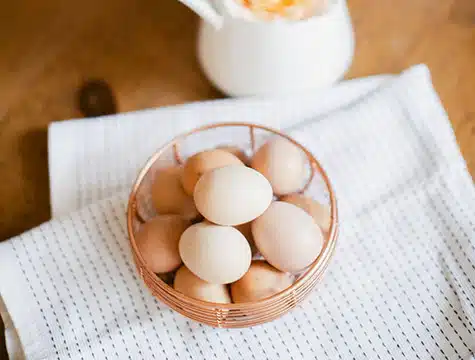
- Organic pasture-raised eggs
- Beef liver
- Spinach
- Kale
- Pumpkin
3. Omega-3 Fatty Acids
Inflammation is a major disruptor of the delicate “hypothalamic-pituitary-ovarian (HPO) axis” (the communication line between your brain and ovaries).16 Omega-3 fatty acids help improve blood flow to the reproductive organs and provide the building blocks for hormone receptors on cell membranes.17
Great sources of omega-3 fatty acids include:
- Wild-caught salmon
- Sardines
- Walnuts
- Chia seeds
4. Healthy Fats and Cholesterol
Cholesterol is critical for the synthesis of steroid hormones, including sex hormones.18 If you are on an overly restrictive, low-fat diet, your body may struggle to produce the estrogen surge required for ovulation.
Sources of healthy fats include:
- Avocado
- Olive oil
- Coconut
- Nuts (walnuts, almonds) and seeds
- Fatty fish
5. High-Quality Protein
Muscle is an endocrine organ. Having adequate lean muscle mass is one of the best ways to combat insulin resistance. During the follicular phase, your body is more anabolic (geared toward muscle building and repair) due to rising estrogen levels.19
To support healthy muscle mass, your follicular phase foods plan must include high-quality protein. This provides the amino acids necessary for muscle maintenance and the synthesis of hormones.
Examples of high-quality protein include:
- Grass-fed or pasture-raised meats
- Organic, pasture-raised eggs
- Fermented dairy
- Lentils
- Chickpeas

The “Spring” Metaphor: Nature’s Wisdom
There is a beautiful correlation between the world around us and the world within us. In spring, we see the earth “waking up” – ice and snow melt, water flows, and bitter greens like dandelion appear to cleanse the liver of the heavy fats stored during winter.
Similarly, your body in the follicular phase is waking up from the “winter” of menstruation. It is a time of incredible potential and fertility – not just in the sense of trying to become pregnant, but in the sense of creativity and personal vitality. When we align our plates with nature’s wisdom, we’re providing our bodies with a fresh chance to restore balance.
By choosing specific follicular phase foods, you’re doing more than just eating. You’re communicating with your entire body that you’re actively supporting its work and that you have the resources to thrive.
Choose Follicular Phase Foods for Balance
By planting the seeds of essential nutrients in the spring of your cycle, you’ll reap the benefits of better hormone balance and fewer symptoms all month long.
If you’ve been struggling with irregular cycles or worrying about your fertility, remember that you don’t have to wait for the perfect moment to start. Hormones can be complex, and while these general principles are a great start, your body is unique. Schedule a 15-minute complimentary consultation here. I’d love to answer any questions and point you in the right direction.